.png)
.png)
.png)
.png)
.png)
.png)
.png)

.png)
.png)


Sustainability
We are a purpose-led financial services provider that has operated in Africa for over 130 years. We are present in 12 countries across Africa and four countries beyond the continent. We play an integral role in the economic life of individuals, businesses, and nations. We help create, grow, and protect wealth through partnerships in economic development while playing a shaping role in Africa’s growth and sustainability.
Our Approach
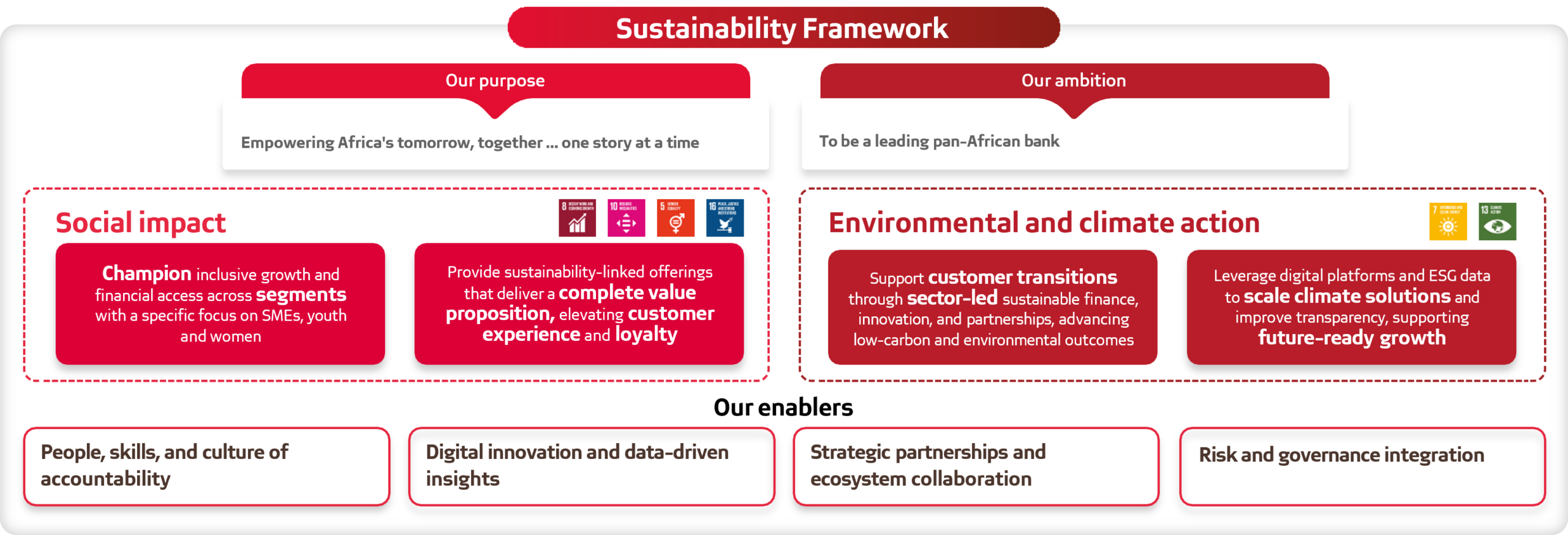
We approach sustainability based on global and African market shifts, stakeholder expectations, and our commitment to long-term value creation. We prioritise areas where we can deliver the greatest impact and that align with the UN SDGs. We have transitioned from a three-pillar model to a focused, integrated two-pillar Sustainability Framework: Social impact Environmental and climate action. This shift strengthens our focus on value creation, aligning sustainability with our commercial strategy, capital allocation decisions, customer engagement and long-term risk management. It brings greater clarity to our priorities, enhances reporting consistency, and supports scalable delivery.
Climate finance from an African perspective
A big question looms over COP30: If we cannot stop a warming climate, can we at least adapt?
By Msizi Khoza
Brazil has called on nations to prioritize honouring previous pledges ahead of COP30.
Climate adaptation financing was a major talking point at COP29 in Baku, Azerbaijan. Developed nations agreed to take the lead in raising the $300 billion required to start addressing the adaptation needs of especially poorer countries that are more vulnerable to adverse weather risks caused by rising temperatures.
In simple terms, adaptation seeks to reduce the vulnerability of social and ecological systems to climate change impacts and enhance their resilience and capacity to cope with these changes.
At Glasgow in 2021, rich nations pledged to assist developing nations and raise about $40 billion a year by 2025. However, the gap between commitments made and reality remains significant. Also, the bulk of these financial commitments goes towards mitigation and cutting emissions instead of adaptation.