Categories
Media release

Absa Group Reports Resilient 2023 First-Half Earnings, Reflecting Diverse Franchise

Absa Group Reports Resilient 2023 First-Half Earnings, Reflecting Diverse Franchise

scroll for more

*Salient points

Revenue increased 13% to R52.3 billion

Operating costs increased 10% to R26.1 billion

Cost-to-income ratio improved to 49.8%

Pre-provision profit increased 16% to R26.2 billion

Impairments increased 60% to R8.3 billion

Headline earnings per share increased 3% to 1321.3 cents

Return on equity decreased to 16.7%

Group CET 1 ratio flat at 13%

Dividend per share increased 5% to 685 cents

*Note: Normalised values are shown (stripping out the effect of the separation from Barclays PLC)

Absa Group reported resilient results in an increasingly challenging operating environment during the first half of 2023. With the right strategy in place, an experienced and diverse leadership team, a strong balance sheet and consistent execution, Absa remains positioned for growth.

Headline earnings increased 2% to R11.2 billion from a high base a year earlier, as strong revenue growth of 16% offset 60% higher credit impairments.

The Group’s well-diversified franchise helped mitigate the earnings impact of the increasing strain on consumers in South Africa, which is Absa’s largest market. Headline earnings in South Africa declined 17%, given elevated credit impairments, while earnings for regions outside of South Africa, collectively known as Africa regions, almost doubled.

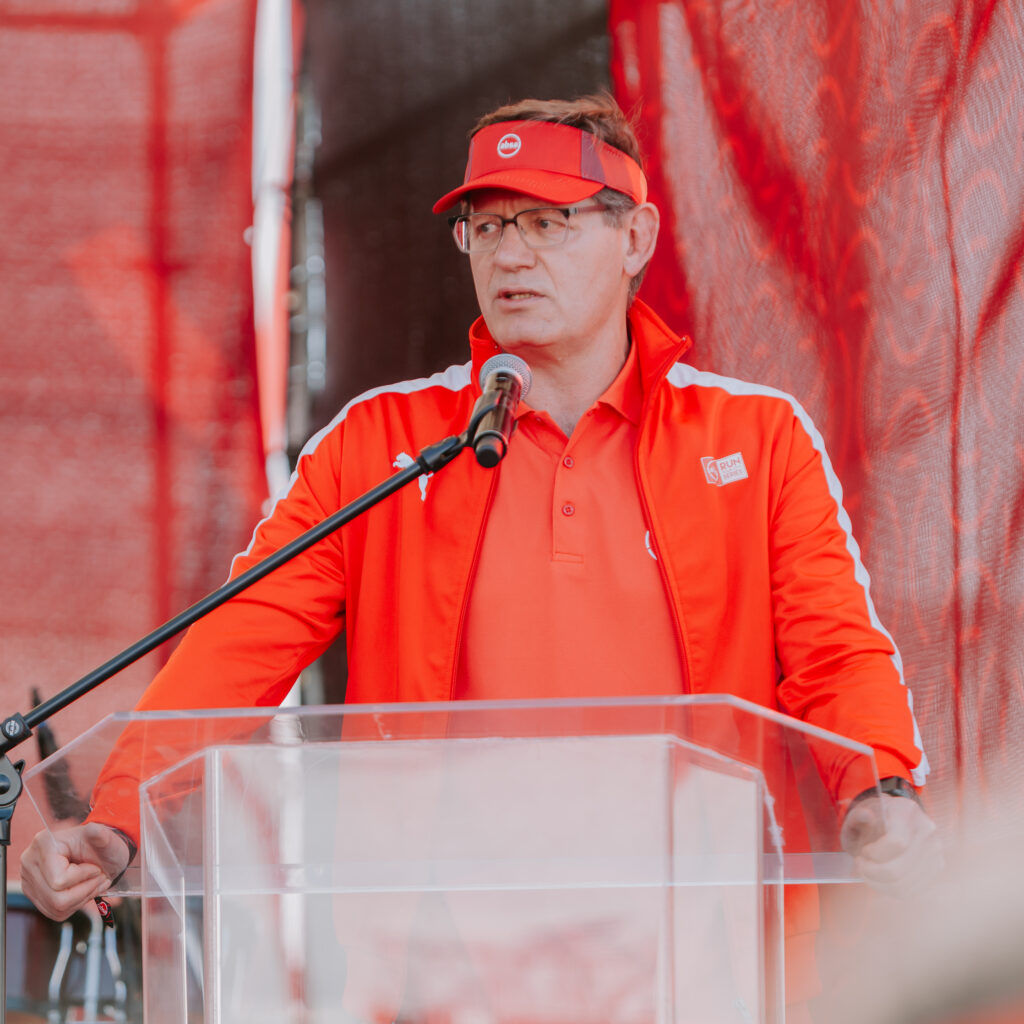
Arrie Rautenbach
Arrie Rautenbach

“Our deliberate diversification strategy stood us in good stead in the first half of 2023, given weaker economic conditions and significant pressure on consumers in South Africa,” said Arrie Rautenbach, Absa Group Chief Executive Officer. “We will further diversify going forward by deploying resources and capital into attractive growth prospects on the continent which provides a natural performance hedge for the group, while continuing to invest in South Africa.”

The Group’s underlying performance during the period is reflected by 16% higher pre-provision profit, which is profit before setting aside money for bad debts, tax and other items.

“We are executing consistently against our strategic focus areas, as we strive to become a leading Pan-African bank. This is evident in the continued progress we have made against key targets," said Rautenbach.

“We are particularly pleased with our return on equity of 16.7% and with our cost-to-income ratio improving further to 49.8%, driven by solid revenue growth,” said Jason Quinn, Absa Group Financial Director. “We remain well capitalised to fund growth opportunities,” he said.

Absa continued to grow as a primary partner, with a focus on building its transactional business through investments across its businesses, notably in Private & Wealth, Youth propositions, Bancassurance and Business Banking during the period.

“We are seeing tangible progress in becoming the primary partner for our customers, which is shown by improved client experience, accelerated customer growth and solid deposit growth,” said Rautenbach.

Customer numbers grew 4% to 11.8 million, while customer deposits increased 11% to R1.2 trillion. New-to-bank retail transactional account sales increased by 23% in South Africa, with active customers in Absa Regional Operations (ARO) up 16%.

Absa continued to invest heavily in technology and its digital journey yielded value across the franchise, with the Group’s digital customer base growing across retail and corporate segments. Digitally active customers increased 10% to 3.5 million.

The effects of slower economic growth, increased interest rates and consumer strain were evident in the performance of the Group’s retail businesses in South Africa.

Product Solutions Cluster (SA home loans, vehicle financing, insurance, investment, advisory services)

Headline earnings declined 13% as credit impairments increased, reflecting significantly higher interest rates and weak economic growth that put consumers under strain.  Demand in the home loans market slowed, with application volumes decreasing across the industry, reflecting the subdued property market, while vehicle sales displayed resilience.

Pre-provision profit growth remained strong, as the insurance business performed well, given lower mortality claims, improved investment returns and solid net premium income growth.

Everyday Banking (day-to-day banking products and services in SA such as credit card, payments and personal loans)

Headline earnings decreased 21% due to elevated credit impairments, which was largely due to the adverse economic climate and the impact on customers’ disposable income. Pleasingly, the customer base grew 2%, given strong growth momentum in the young adult and entry level segments.

A focus on enhancing customer experience has improved customer experience scores every year since 2019. In 2023, the score increased by a further 8 percentage points through enhanced propositions and pricing that offer customers better value for money. The franchise provided a further R250 million in value to primary banked customers through pricing reductions while addressing historic customer pain points, bringing the cumulative relief since 2020 to R750 million. Key among these was making the Absa Rewards programme free from January 2023, enabling broader customer engagement through this platform, and allowing customers to enjoy cashback rewards on everyday spending. The number of Rewards members grew 26%, with members earning over R400 million in value during the reporting period. The programme has proven to be effective in driving primacy.

Relationship Banking (services wealth and private clients and SMEs in SA)

Headline earnings decreased by 9% as credit impairments doubled off a low base, due to the difficult macroeconomic environment that impacted customers including small and medium-sized enterprises (SMEs).

Absa continuously improved its SME proposition during the period, expanding the distribution network, tailoring customer value propositions and improving ease of doing business.

Relationship Banking made progress on its ESG agenda. As at 30 June 2023, it had financed over R1.3 billion in renewable power. A green asset finance solution was also launched, offering financing of solar installations, including batteries to keep businesses productive. Included in this offering, SME customers who have financed their property with Absa qualify for a grant equivalent to 10% of installation costs (up to a maximum of R50 000).

Absa Regional Operations - Retail and Business Banking (retail, business banking and insurance products and services for individuals, small to medium enterprises and commercial customers across the region.)

Headline earnings increased by 84%, given strong revenue growth. The improved performance was supported by a range of digital advances including the launch of a digital onboarding capability - a quick and efficient, channel-agnostic onboarding solution, which provides an enhanced customer experience in six ARO markets. MobiTap, a first-to-market innovation, now allows merchants and SMEs to use their smartphones in place of traditional point-of-sale devices to process contactless card transactions in three markets.

Mobile lending for previously under-banked and unbanked customers continued to accelerate, with disbursements increasing by 44% to R3.6 billion, in line with our strategy to improve financial inclusion.

Corporate and Investment Banking (SA and ARO corporate and investment banking)

CIB grew headline earnings 32%, increasing its contribution to more than half of Absa Group’s headline earnings.

Several achievements underpinned CIB’s performance, including strong new client acquisition in priority and growth sectors in South Africa and ARO. CIB continued to drive its commitment to being an African leader in ESG insights, products and advice. Since 2021, it has arranged R61 billion in sustainable finance deals and is on track to meet its commitment to arrange R100 billion by 2025.

An Active Force for Good

Absa advanced its ESG agenda during the half, announcing its long-term ambition to reach a Net Zero position by 2050 for scope 1, 2, and 3 emissions.

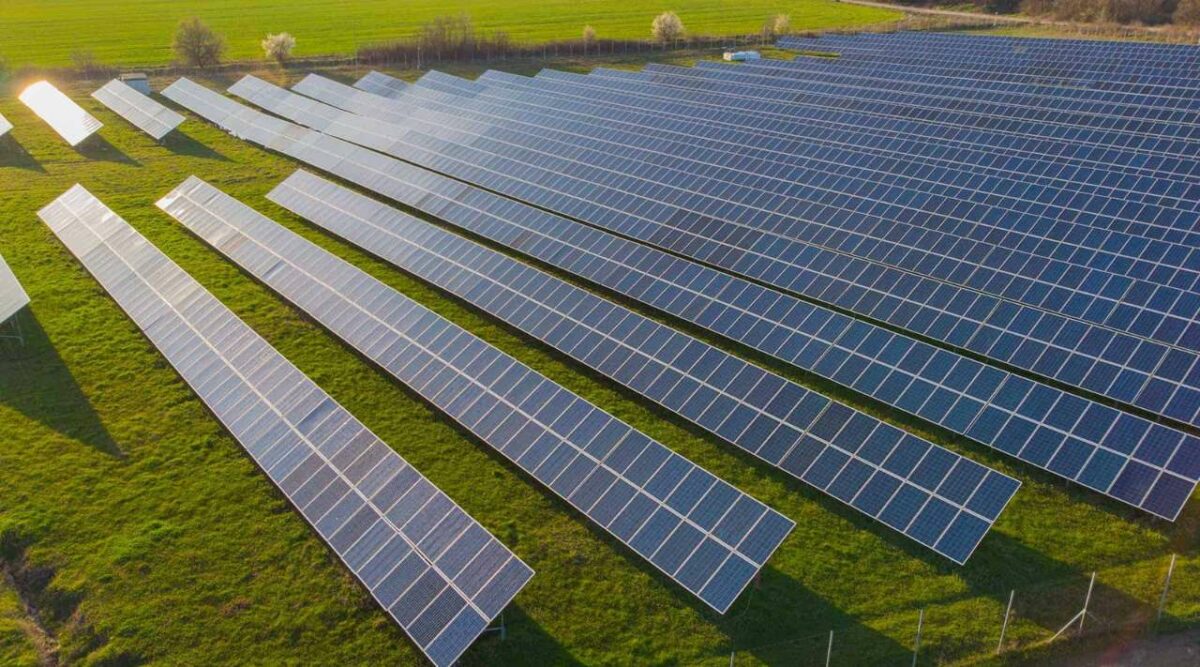
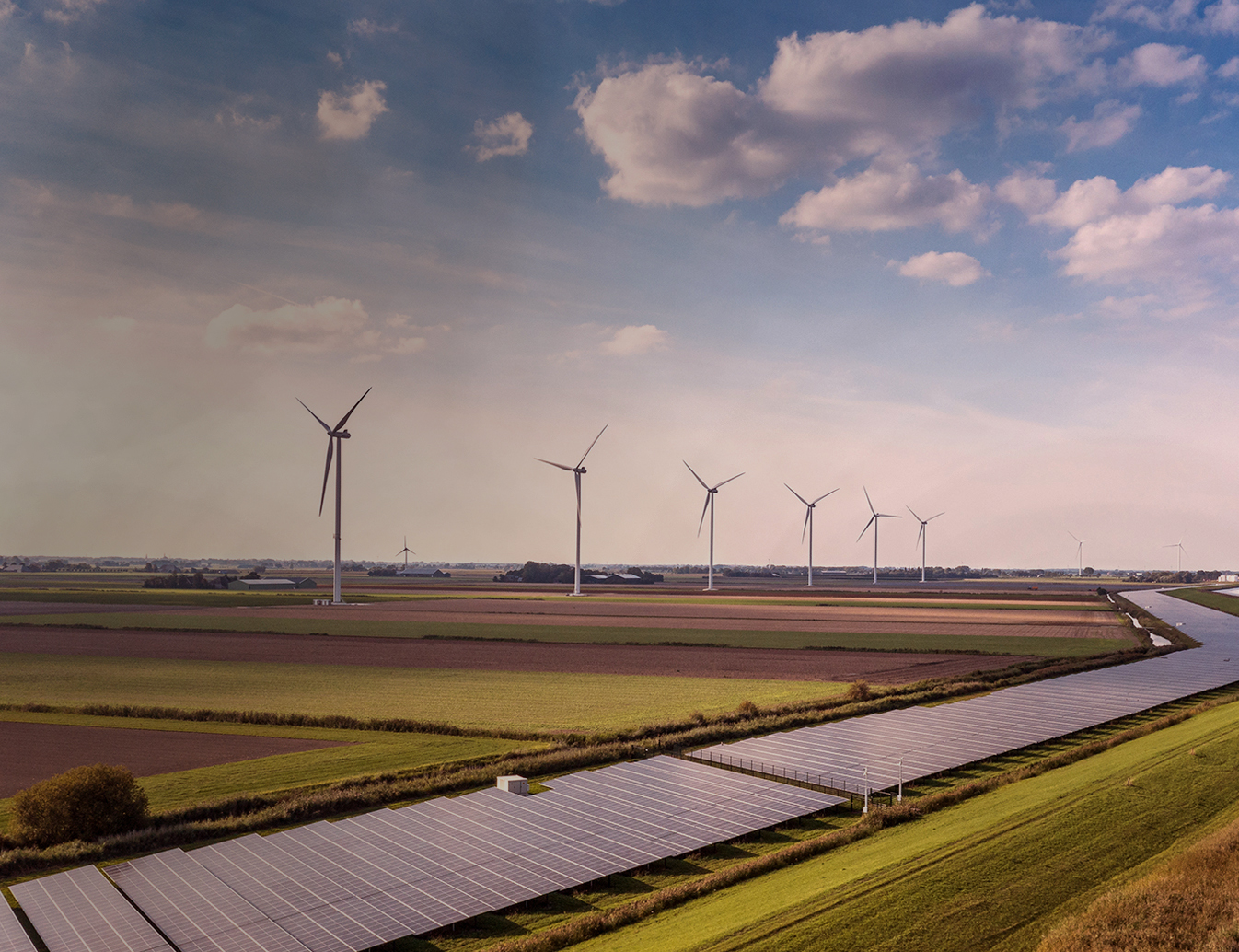
Absa’s leading position in renewable finance in South Africa continued.  It has participated in 53% of Renewable Energy Independent Power Producer Programme projects, with a combined capacity of more than 4.3 Gigawatts to date.

The group’s ambition to become a leader in sustainable financing was bolstered by an agreement with the International Finance Corporation (IFC) to promote green building finance through a R4.5 billion loan. The agreement builds on the work with the IFC in 2022, when it provided a loan of up to R2 billion to fund affordable housing in South Africa.

Absa continued to invest in communities, allocating more than R180 million to support education and youth employability, strategic engagement initiatives as well as corporate community support, to enable inclusive sustainable economic growth in Africa. More than 37 900 individuals benefited from financial education literacy and tools for long-term financial health and 121 students participated in the Absa Fellowship programme, aimed at supporting the development of future leaders in Africa, among other initiatives.

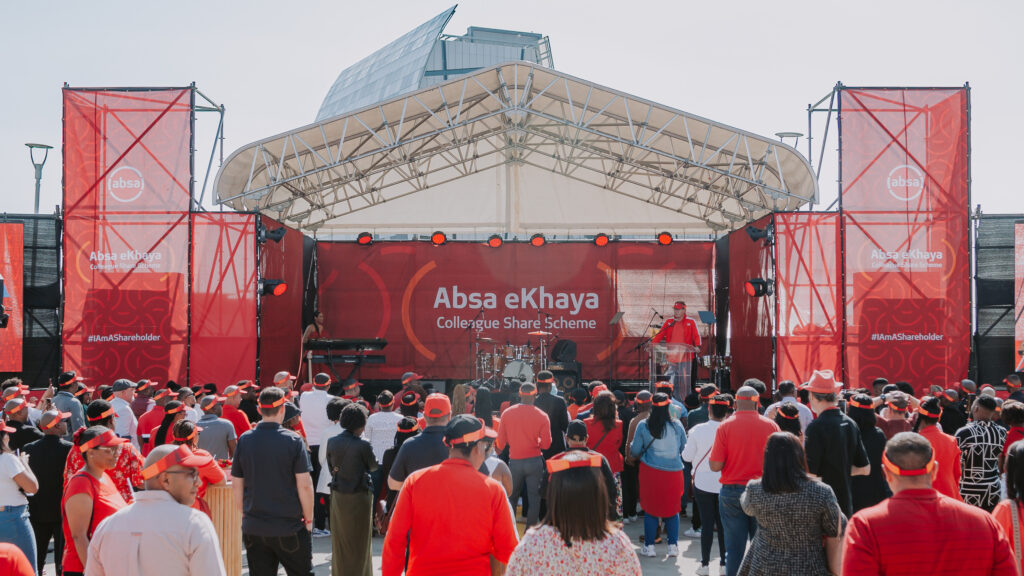
Communities will also benefit from the launch of one of the largest broad-based black economic empowerment transactions in recent times. The transaction sets aside 7% of Absa Group shares for the benefit of staff and communities in South Africa, underscoring our commitment to transformation. Staff outside of South Africa will be able to participate in a cash-equivalent scheme, pending local approvals.

Absa’s continued resilience in a tough environment is also the result of the significant progress in building positive momentum in enhancing corporate purpose, culture and values. Absa reached a milestone in February when work that commenced in 2022 culminated in a new purpose statement that underpins Absa’s strategy and values as an organisation. The new statement “Empowering Africa’s tomorrow, together… one story at a time” is being entrenched across the group and will ultimately drive enhanced customer service.

Outlook

The economic environment remains uncertain. Geopolitical concerns, particularly surrounding the Russia-Ukraine conflict and rising tension between the West and China, appear likely to impact the outlook for some time.

Absa expects real GDP growth of 0.7% in South Africa, where electricity supply remains a significant risk for the economy for the foreseeable future. It expects GDP-weighted economic growth in ARO countries to slow to 4.3% in 2023.

Based on these assumptions, and excluding further major unforeseen political, macroeconomic or regulatory developments, Absa expects high single-digit revenue growth in 2023, driving high single-digit growth in pre-provision profit, while its credit loss ratio will likely improve substantially in the second half.

Absa’s strong balance sheet and liquidity, together with the value of its diversified franchise, position the Group well to deliver on its strategy over the medium-term.

Categories
Our Voices

Empowering women

Empowering women

scroll for more

We’re committed to continually driving positive societal change by investing in women.

As a purpose-driven organisation, we’re committed to being an active force for good in everything that we do. Empowering women is one area where we have focused our efforts. We believe that empowering women is not just an economic imperative, but also a vital social cause that deserves our wholehearted support. To that end, we have implemented a deliberate approach to advancing women within our organisation.

  • We’re proud of our consistent prioritisation of women’s advancement through appointments and promotions.
  • Our Women Manifesto reflects our commitment to gender inclusivity and providing equal opportunities for women throughout their careers. By empowering women within our organisation, we create an environment where they can thrive and succeed.
  • Our IgniteHer Women’s Development Programme won gold in the Best Advancement in Leadership Development for Women category at the 2022 Brandon Hall Group Human Capital Management Excellence Awards.
  • We were recognised by Forbes as one of the World’s Top Female-friendly Companies for 2022. We ranked among the top 40 companies worldwide in championing gender equality and creating an inclusive work environment.
  • In addition to our internal initiatives, we provide substantial funding to women-owned businesses through our lending practices. We understand the significant role women play in our communities and the importance of enabling their economic and social empowerment. In 2022, we allocated over R6.9 billion to support women-owned businesses, helping to accelerate their progress and success.
  • We won the Sustainability and Social Investment Awards 2022 for the best company promoting STEM education, together with two additional awards, of which one was for our women empowerment drive.
  • We entered a five-year partnership with the Mastercard Foundation in Ghana to create the Absa Young Africa Works, aimed at enabling young people, particularly young women, to access work in investing in SMMEs.
  • In the sport of mountain biking, we are committed to growing the #SheUntamed initiative, a programme designed to improve women’s access to this sport through increased participation of women in the Team Absa line-up.
  • We’ve also worked with the United Nations Women to fast-track the implementation of the presidential pronouncement to increase access to public procurement for women-owned businesses and women from designated groups to a minimum of 40%. Women-owned enterprises involved realised a 166% increase in revenue, from R2.1 million to R5.5 million. This also led to growth in jobs created, from 58 to 121.

We firmly believe that empowering women is not only the right thing to do, but it also drives positive change in society. We remain committed to advancing gender equality, both internally and externally, and will continue to champion the empowerment of women in every aspect of our work.

Categories
Media release

Absa #SheUntamed Celebrates Three Wins At The 2023 Prism Awards

Absa #SheUntamed Celebrates Three Wins At The 2023 Prism Awards

scroll for more

Absa and their sponsorship agency, Playmakers Sponsorship and Marketing, walked away with three awards at the prestigious 2023 Prism Awards, Africa’s most sought-after public relations and communication awards, which took place in Johannesburg on Saturday, 29 July 2023.

The dynamic partnership between Absa and Playmakers proved to be an exceptional force, garnering recognition in multiple categories for #SheUntamed, an Absa initiative for women in cycling:

  • Gold – Best PR Campaign for a Sponsorship
  • Silver – Best PR Campaign for Sport
  • Silver – Best Use of Video Communication within a PR Campaign

The Best PR Campaign for Sponsorship saw Absa present #SheUntamed, an initiative by Absa, a purpose-led bank, to improve women’s access to mountain biking, particularly to the Absa Cape Epic. #SheUntamed was developed in 2020, aiming to inspire more women to bring their possibilities to life by taking up the sport and ultimately completing the Absa Cape Epic. To add to this accolade, Absa #SheUntamed also took home two silver awards, including Best PR Campaign for Sport and Best Use of Video Communication within a PR Campaign.

To inspire women riders, Playmakers collaborated with Future Play, a production company that is part of the Playmakers Group, to produce Absa #SheUntamed No Lanes, a docuseries celebrating the untamed spirit of women who are passionate about mountain biking.

Seishane Leshaba, Playmakers Group Managing Partner, said, ”From a PR perspective, we had a powerful story to tell, and the goal of inspiring future women mountain bikers through the journey of our incredible #SheUntamed riders and coaches. This campaign demonstrates that sponsorship as a medium has the power to integrate with corporate social responsibility (CSR) and produce meaningful work for our clients and those impacted by their programmes and the communities in which they operate. We thank our valued client, Absa, who constantly challenges us to push boundaries in all our work.”

Tina Venter, Executive: Marketing Operations, Absa Group, said, “We are happy to have been recognised at these prestigious public relations awards. #SheUntamed has proved that our sponsorship of the Absa Cape Epic is more than just a sponsorship. This is one of several initiatives created by Absa to drive transformation, diversity and inclusion and, in turn, is part of Absa’s ambition to be an active force for good in everything that we do, and we are thrilled that our efforts in doing so are recognised.

Picture1.2
Picture2
Picture3

The PRISMs are awarded to, among others, individuals, students, companies and government organisations that have successfully fused strategy with creativity and professionalism to achieve the best communications and business objectives in their public relations campaigns.

Categories
Media release

Absa Purchasing Managers’ Index July 2023

Absa Purchasing Managers' Index July 2023

scroll for more

After what looks to have been a decent second quarter, at least in terms of quarterly growth momentum, the manufacturing sector had a setback at the start of the third quarter. This is the message from the latest seasonally adjusted Absa Purchasing Managers’ Index (PMI). Although the headline index was only marginally lower in July at 47.3 index points (47.6 in June), this stability masks substantial changes in some of the major PMI subcomponents.

Categories
Media release

IFC And Absa Partner To Expand Financing For Green Buildings In South Africa

IFC And Absa Partner To Expand Financing For Green Buildings In South Africa

scroll for more

To support the development of certified green buildings in South Africa, IFC today announced a partnership with Absa Bank Limited to help the bank expand its residential and commercial loans and mortgage finance program for buildings that are environmentally responsible and resource efficient.

IFC will provide a loan of up to 4.5 billion South African rand (about $236 million) to support Absa’s strategy to expand its green buildings finance portfolio which will include new certified green buildings and mortgages. This will enable Absa to increase access to green building finance for developers and individual home buyers.

In line with its climate strategy, Absa will use the investment to finance environmentally friendly green buildings certified under IFC’s Excellence in Design for Greater Efficiencies (EDGE) program as well as similar green building certifications, which helps standardize the design and the certification for resource efficient and climate friendly buildings.

Green buildings represent a significant low-carbon investment opportunity because they can save electricity and reduce water consumption. An IFC study estimates that South Africa’s green building demand presents a $7 billion investment opportunity between 2016 and 2030. Although the supply of green buildings in the country is growing, the green building market is still at a nascent stage.

IFC estimates that the project will help reduce over 12,000 tons of emissions annually. The investment will also contribute to South Africa’s Nationally Determined Contribution (NDC) targets under the Paris Agreement to reduce GHG emissions by 42 percent by 2025.

“As a responsible corporate citizen, one of our strategic imperatives is to be an active force for good in everything we do, which is key to delivering true long-term value linked to our purpose,” said Punki Modise, Absa Group Chief Strategy and Sustainability Officer. “The loan, which includes a performance-based incentive for clients, significantly enhances the resources we have available to support clients in making environmentally responsible and resource-efficient investments in commercial and residential developments, mainly focused on affordable housing.”

“Increasing funding for green buildings in South Africa can help the country address power and water shortages and support sustainable economic growth,” said Adamou Labara, IFC Country Manager for South Africa. “IFC’s partnership with Absa will make it easier for developers and individuals to access green building finance and speed the development of environmentally friendly buildings in the country.”

As part of the partnership, IFC will provide performance-based incentives to partly offset the greening and certification costs for green buildings and mortgages financed by Absa under the project, which will benefit end users in the form of reduced utility bills, such as power and water bills.

The incentives are funded by the IFC-UK Market Accelerator for Green Construction (MAGC) program, which is sponsored by the United Kingdom, to scale green construction across emerging markets by incentivizing financial intermediaries to develop and introduce new green building finance products.

IFC will support Absa with advisory services to improve its capacity to originate and manage loans for the development or retrofits of certified green buildings. Absa will also leverage IFC’s expertise to gain further knowledge and enhance internal capacity to expand its green buildings business segment.

The investment builds on IFC’s 2 billion South African rand (approximately $124 million) loan in 2022, used to support Absa’s growth in affordable housing finance in South Africa. It aligns with IFC’s strategy to enhance climate change resilience in South Africa by investing in inclusive and sustainable project

Categories
Media release

Absa Group Joins Over 115 Visionary Leaders To Proudly Drive Positive Change In South Africa

Absa Group Joins Over 115 Visionary Leaders To Proudly Drive Positive Change In South Africa

scroll for more

Absa Group’s CEO, Arrie Rautenbach, proudly joins over 115 visionary leaders in signing a pledge to drive positive change in South Africa. This collective effort brings together CEOs from the country’s leading corporations, united by their unwavering belief in the immense potential of South Africa and their commitment to realising it.

The pledge is a testament to Absa’s dedication to being an active force for good and to building the nation while addressing the current challenges head on. By fostering strategic partnerships and focused interventions, the companies represented in this pledge aim to achieve sustainable, inclusive economic growth, making a significant and positive impact on the lives of all South Africans. These companies span across all sectors of the South African economy, with a combined value exceeding R11 trillion and employing over 1 million people.

Absa proudly stands united with other visionary leaders in their commitment to driving positive change in South Africa. Together, they aim to create hope and opportunities for all citizens, making a profound impact on the nation and its communities.

Read the full press release that was issued by Business Unity South Africa (BUSA) here: https://www.busa.org.za/

Categories
Our Voices

Perfect storm for sustainable growth

Perfect storm for sustainable growth

scroll for more

South Africa’s perfect storm may provide the stretch we need to secure sustainable growth.

As the cold weather descends, it’s tempting to get sucked into a downward spiral of negativity over all the challenges South Africa faces. Stubbornly high inflation is putting further pressure on the cost of living, a weak rand is pushing up the cost of imported goods and petrol and then there are the ongoing power supply issues.

These are undoubtedly serious problems. Might this be a perfect storm, providing opportunity for South Africa to overcome adversity and thrive? South Africans have proved time and again that when all hope seems lost, they have the resilience and perseverance to overcome the obstacles and embrace the opportunities that emerge even in the darkest times.

We’ve already seen green shoots emerging from the unprecedented challenges we’ve faced over the last few years. We only need to look as far back as 2020, where, almost overnight, the COVID pandemic forced companies to transition to remote working conditions, finally tapping into the productivity gains technology has offered us for the last 15 years. Post-pandemic, corporates have been tapping into the cost efficiencies and productivity gains a motivated remote or hybrid workforce offers.

Businesses finding ways to survive the current power supply issues will likely benefit from the same step change in how they operate. Already manufacturing companies reliant on a predictable power supply have been forced to innovate and find ways to do more with less (power) by using new materials and production techniques. Many have introduced night shifts to tap into the more reliable energy supply available when load-shedding schedules are reduced overnight, and demand on the grid eases.

On solving the power crisis in South Africa, we were buoyed by the constructive solutions envisaged by many of The Gathering: Earth Edition participants. Former Eskom CEO Andre De Ruyter believes solving South Africa’s energy and environmental crisis is “not a moonshot but within our grasp”. He backed up his conviction with a useful roadmap of how we can get there equitably, but emphasised that it will require resolve, urgency, and leadership ready to grasp the opportunity the crisis presents.

Actions taken now mean that when South Africa’s power supply issues are alleviated, businesses that have managed to overcome the challenges could leapfrog their international peers, having developed the capability to produce on a 24/7 basis and conquer other difficulties that have stood in their way.

Positively, the pipeline of new private sector energy generation projects has multiplied over the past year to reach a combined capacity of 10 000 megawatts – and 3 000 MW are set to come online next year.  Additionally, Eskom is expected to bring several major power-generating units back online by the end of the year.

Absa is actively participating in solving South Africa’s energy crisis, becoming Africa’s leader in renewable energy finance. We’re on track to mobilise R100 billion of sustainable finance by the end of 2025 and are channelling this through the Renewable Energy Independent Power Producer Procurement Programme (REIPPP). To date, we have arranged financing for 33 projects (approximately 3GWs) under the first four bidding rounds of the programme, which are now in the operational phase and already supply power to the grid.

The REIPPP is the critical driver of South Africa’s transition to a low-carbon economy. It aligns with the country’s commitment to reducing carbon emissions in line with the 2015 Paris Climate Agreement and the 2019 Energy Integrated Resource Plan goal to diversify energy resources and reduce reliance on coal. Renewable energy technologies supported by the plan include wind, solar PV, concentrated solar power and biomass.

Apart from the government’s REIPP programme, we are also actively assisting clients in entering the captive energy market. We have been involved in the first utility-scale deal, which reached financial close during 2022 and is 200MW in size. We expect this market to grow significantly over the next two to three years, and we are currently mandated to facilitate over 1GW.

Absa also offers loan funding to our small- and medium-sized clients to install alternative energy solutions. In addition to providing finance, Absa also extends grants to qualifying businesses through its R50 million renewable energy fund. These total 10% of the overall installation value, up to a maximum of R50 000.

As one of South Africa’s largest banks, we are fully invested in doing what is right from an environmental perspective and solving South Africa’s energy challenges. Crucial to achieving an equitable and just transition is that we engage with those affected by the transition and co-create a new future with all stakeholders. Doing so will allow us to address the country’s untenable unemployment levels through job creation and skills development.

As Thomas Edison said: “Most people miss opportunity because it is dressed in overalls and looks like work.” The perfect storm has jolted us into understanding that we have no other option but to work hard to secure our sustainable existence on the planet.

The businesses already thinking ahead, planning for what’s next and making sense of the unknown stand ready to benefit from the growth opportunities arising from the climate and energy crises. To those still struggling to survive, the good news is that respite is not as far off as you might think.

Absa was the sponsor of the inaugural The Gathering, Earth Edition – Daily Maverick’s first sustainability and climate crisis focused conference, which recently took place at the CTICC on 26 May, 2023. Faisal Mkhize, Chief Executive for Relationship Banking gave the sponsor’s address from Absa and participated in the event. Faisal shares his thoughts, as he taps into energy from discussions at The Gathering: Earth Edition, that have framed a positive outlook for South Africa. Watch Faisal’s address at The Gathering: Earth Edition, as well as all the panel discussions here.

Categories
Media release

Absa L’Atelier 2021 Ambassadors Present “Refuge: An Uncommon Home” Exhibition, Taking Centre Stage In Ghana

Absa L'Atelier 2021 Ambassadors Present "Refuge: An Uncommon Home" Exhibition, Taking Centre Stage In Ghana

scroll for more

Empowering Dreams, Embracing Diversity: Meet the Inspiring Absa 2021 Ambassadors as they take centre stage in Ghana:
Dr Adelheid Frackiewicz - South Africa, Ayobola Kekere-Ekun - Nigeria, and Michael Blebo - Ghana
Empowering Dreams, Embracing Diversity: Meet the Inspiring Absa 2021 Ambassadors as they take centre stage in Ghana: Dr Adelheid Frackiewicz - South Africa, Ayobola Kekere-Ekun - Nigeria, and Michael Blebo - Ghana

Absa L'Atelier, the renowned art competition and platform for emerging African artists, is thrilled to announce the travelling exhibition for the 2021 Ambassordors, which will be hosted by the Institute Museum of Ghana in Accra, Ghana from 28 July until 26 August 2023.

This collaborative exhibition will showcase recently produced artworks by the 2021 Absa L’Atelier Ambassordors, Dr Adelheid Frackiewicz from South Africa, Ayobola Kekere-Ekun from Nigeria, and Michael Blebo from Ghana. The collaboration has provided these artists with an opportunity to amplify their voices and further provided a platform to showcase their artistic vision, experiences, and insights with the wider African art communities.

This dynamic traveling exhibition to Ghana forms part of the winning prize for the 2021 Ambassordors, their artwork will only exhibit at the Institute Museum of Ghana, and won’t travel beyond this. This collection of artwork has previously been showcased in the Absa Gallery in Johannesburg and at the Klein Karoo Nasionale Kunstefees (KKNK 2023) arts festival in Oudtshoorn, South Africa.

Visitors who’ll be attending the exhibition at the Institute Museum of Ghana will get to experience the diverse transformative journeys of self-reflection undertaken by each of the artists. Seeing first hand how their creative process became a catalyst for introspection, enabling them to confront their personal traumas and navigate their apprehension towards the past and the future. Each artist has expressed how through this process they have been empowered to confront their anxieties about the unknown and embrace a newfound resilience.

"We are excited to launch the exhibition in Ghana, a country with a rich artistic heritage," says Dr Paul Bayliss, Absa Senior Specialist: Art and Museum Curator "The Absa L’Atelier Ambassadors represent the epitome of artistic excellence and creativity in Africa. Through this collaboration, we aim to celebrate their achievements, provide them with a platform to share their stories, and inspire the next generation of African artists."

As part of the tour, the Ambassadors will also visit local art institutions, engage with community art projects, and participate in cultural exchanges with Ghanaian artists and art organisations. This immersive experience will enable them to gain a deeper understanding of the Ghanaian art scene and forge meaningful connections with local artists and communities.

Absa L'Atelier invites the public, art enthusiasts, and media to join the Refuge: An uncommon home collaborative exhibition and witness the incredible talent and artistic vision of these exceptional artists. Their stories and artworks will serve as a source of inspiration, igniting a passion for the arts and promoting the appreciation of African artistic expression.

Categories
Our Voices

Addressing Youth Unemployment

Addressing Youth Unemployment

scroll for more

Unlocking Potential: Addressing Youth Unemployment in South Africa By Makano Morojele

South Africa stands at a critical juncture in its pursuit of sustainable and inclusive economic growth. One of the most pressing challenges we face is youth unemployment, which not only hampers individual potential, but also hinders the development of our nation as a whole. As an active force for good, Absa recognises the urgent need to address this issue head-on.

For Makano Morojele, Corporate Citizenship: Education and Youth Employability at Absa, understanding the causes and barriers of youth unemployment is imperative to being able to address this critical issue. Moreover, she emphasises the transformative role that Absa and its partners can play in driving impactful change. Change that, while enabling a social impact has to drive economic value, aligning to business strategy and purpose as well as priorities within the ESG framework, which according to Morojele, set the direction of travel and help to define the outcomes and goals to be achieved.

Youth unemployment in South Africa is a multifaceted issue with complex causes. With the Quarterly Labour Force Survey for the first quarter of 2023 results showing that the total number of unemployed youth (15-34 years) increased by 241 000 to 4,9 million, a total of 46,5%, this is a crisis we cannot ignore.

Among the prominent factors contributing to this crisis are a mismatch between skills acquired and industry needs, limited access to quality education and vocational training, and structural barriers that hinder youth integration into the labour market. These challenges disproportionately affect marginalised communities, exacerbating existing inequalities and hindering social mobility.

This is further aggravated by the gap that exists in looking at the needs of industry through a single lens. We need to take a step back to understand the nuances of the various economic sectors and unpack the key unique parameters that exist in each. A one size fits all approach does not work, creating policies that try and enforce this in fact creates more barriers.

Furthermore, the rapid growth in technological advancements and everchanging future workplace renders some traditional job roles obsolete, leaving many young people ill-equipped to navigate this evolving landscape. This digital divide once again disproportionately affects marginalised communities who don’t have access to these tools or insights, further deepening existing inequalities.

These barriers and others including the lack of work experience, access to internships or mentorships as well as the social networks that often open up these doors, further hampers the youths’ chances of securing meaningful employment. Additionally, systemic issues such as gender inequality and spatial disparities further compound the challenges faced by our youth.

Added to all of this are the growing financial constraints which pose significant challenges for young people seeking further education opportunities or even to start their own ventures. Limited access to capital, coupled with a dearth of financial literacy, restricts their ability to pursue entrepreneurial endeavours and limits their prospects for success.

To address these complex challenges, the development of a partnership eco-system, where the underlying acknowledgement is that to achieve scale and drive innovative systemic change, coalitions of the willing are critical.

Government is a key component in this eco-system, as working outside of the national network is not an option, rather the TVET college framework provides a critical vehicle for delivery and the agility for growth sectors to upskill, reskill or cross skill. We need to work at bringing transformative change not only to the system itself but to the young people that are served by it. By leveraging our expertise, resources, and extensive network, we can drive transformative change alongside government, educational institutions, NGOs, labour, and the private sector.

Our vision as Absa extends beyond philanthropy; we view our role as being co-creators of sustainable, long-term initiatives that create a lasting impact and fulfil our social goals. For us, adopting a project-by-project approach is not enough, it suggests a finite beginning and end, which is not sustainable. Rather, we look to build on what we have seen works, adapt where necessary,  and learn as we go, creating foundations on which we can grow and extend our impact.

Our participation in Installation and Repair Maintenance (IRM) initiative in collaboration with the National Business Initiative is a key example of this. The initiative aims to unlock demand for IRM skills across the formal and informal/township economy and support young people with the necessary skills and on-the-job training that enables their transition to employment, self-employment and/or further training. The project has forever changed the lives of those involved and demonstrated how the impact and impetus that was created matters, as we were able, through this targeted approach to empower these young people to become drivers of economic growth. Through this incremental approach and our learnings that we have applied into our bigger picture thinking, we are seeing that the gains made are worthwhile.

Through collaboration with our partners, we will continue to design and implement sustainable initiatives that empower young individuals, foster economic growth, and drive positive change in our society. Working together, we can empower Africa’s tomorrow together…one story at a time and achieve lasting impacts that ultimately will secure and pave the way for a brighter future for all.

Categories
Media release

Absa Purchasing Managers’ Index June 2023

Absa Purchasing Managers' Index June 2023

scroll for more

The seasonally adjusted Absa Purchasing Managers’ Index (PMI) declined by 1.6 index points to 47.6 in June 2023. This is the lowest level since mid-2021.

For the first time since 2018, all five subcomponents used to calculate the headline PMI were below the neutral 50-point level, pointing to a worsening of business conditions in the sector. A key drag on the sector seems to come from weak demand, with the new sales orders index edging down once again as the decline in export sales deepened and domestic demand remains under pressure. The index declined from 47.5 in May to 45.6 in June.